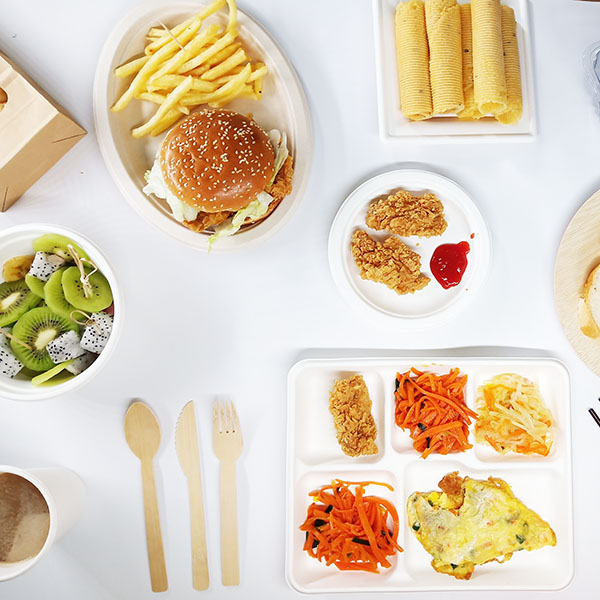
With the global push towards plastic bans and restrictions, the inevitability of a plastic-free or degradable future has become apparent. Traditional plastic disposal methods often involve incineration, releasing significant amounts of greenhouse gases into the atmosphere. On the other hand, disposable biodegradable food containers offer a sustainable solution, as they can break down naturally without harming the environment.
Let's take a closer look at some of the disposable biodegradable food containers available in the market:
1. Pulp Molded Containers (Plant Fiber Molded Utensils):
Pulp molded utensils have gained prominence in the journey towards plastic-free alternatives. These one-time use containers are made from plant fibers such as wheat straw and sugarcane bagasse, eliminating the need for added polypropylene (PP) materials. Through a wet pressing process, these containers are molded using pulp, with the incorporation of food-grade additives for waterproofing and oil resistance.
Plant fiber biodegradable containers, especially those molded from sugarcane bagasse, fall into the fully degradable category. They can completely decompose into organic matter within 90 days under industrial or home composting conditions, returning to nature without contributing to air pollution.
2. Corn Starch-Based Containers:
Containers made from corn starch are crafted using natural corn starch and plant fibers, combined with substances like bio-polyester and polyols. These containers naturally degrade in soil and environmental conditions, with a decomposition rate ranging from 60% to 80%, making them a viable substitute for plastic products and reducing environmental pollution.
Corn starch containers are often seen as ideal replacements for the controversial "disposable tableware" prevalent in the food industry, contributing to a reduction in white pollution.
3. PLA Biodegradable Utensils:
PLA (Polylactic Acid) biodegradable containers typically involve the integration of PLA composite films with pulp molded products, known as PLA-coated products.
PLA composite film is produced from lactic acid, a derivative of renewable plant resources such as corn. PLA exhibits excellent biodegradability, breaking down into carbon dioxide and water when exposed to natural microorganisms after use. This environmentally friendly material helps protect the ecosystem, making it a recognized eco-friendly option.
Given the advantages of PLA, combining it with the pulp molding process not only reduces the need for additional waterproofing agents but also enhances the sealing of air holes in the products. This results in improved leak resistance, reduced product permeability, and enhanced heat retention, making the containers more practical for everyday use.
In conclusion, the market offers various alternatives to traditional plastic containers, each with its unique advantages in terms of sustainability and environmental impact. Embracing these disposable biodegradable food containers is a step towards a cleaner, greener future.